Every inquiry your firm paid for and didn't sign is still in that database, waiting. Not because the lead was bad. Because the follow-through didn't happen at 11pm on a Saturday, or on the third call attempt, or after your intake team got buried on a Tuesday spike. We recover those cases with conversations warm enough that real injured callers respond, and we make sure every new lead that comes in after hours gets a real answer before your competitor does.
One legal services firm: 6,000 leads written off as dead. $260K recovered. 54 cases signed. Zero new ad spend.
"I have been recovering lost revenue since before AI existed. It started in hospitals, through audit and reactivation. The method has not changed. The tools just run faster now."
Tiffany, Founder of Vision Automated
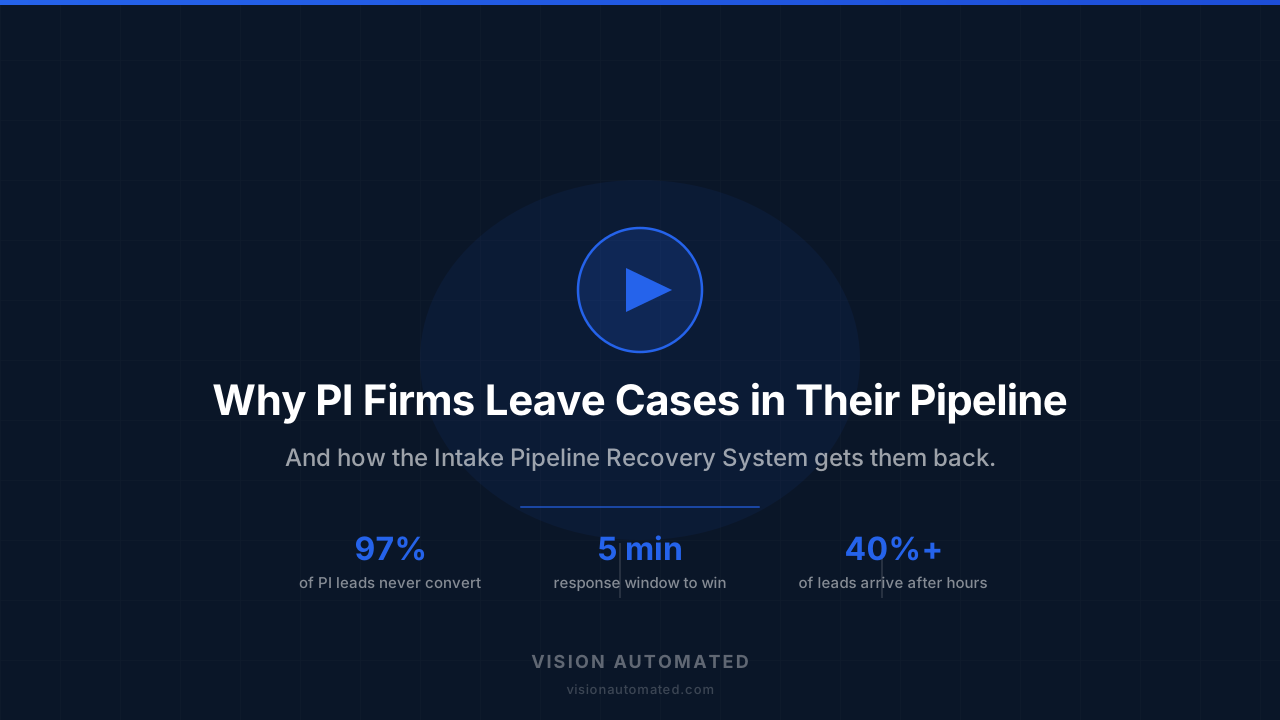
Five minutes. The three leak points, the recovery system, and what a compassionate AI intake conversation actually sounds like on a real call.
These are not lead quality problems. They are intake coverage problems. And they are costing you cases every single month, from leads you already paid to acquire.
Your firm paid to generate that lead. At 7:30pm, they called. Nobody answered. By morning, they had retained the firm that picked up. 40% of PI inquiries arrive after 5pm. The accident victim calls three firms in a row from the ER waiting room, and the first real conversation wins the case. Right now, that is not you.
Last month's leads that did not sign. The week-old inquiry that got one call and one text. The prospect who said "I'll think about it" and never heard back. They are still in your CRM, and most of them have not hired anyone yet. PI claimants typically take 2 to 7 days to decide. The firm that follows through the longest wins, and most intake teams cannot sustain that at volume.
A thorough PI case evaluation takes 20 to 30 questions. When every inbound inquiry triggers the full process, including the minor property damage call and the out-of-state inquiry, your intake specialists are buried before they reach the catastrophic injury cases that deserve their full attention. The high-value calls wait in queue behind the ones that should have been screened at question five.
The leads you already paid for are still there. The revenue is sitting uncollected. We go get it.
Three components. One outcome: more signed cases from the leads you already have, without new ad spend or new headcount.
Before we touch a single lead, we map your intake funnel and identify precisely where cases are being lost: after hours, in the first 48-hour window, or in the qualification process. You see the gap in concrete numbers before we do anything. No guessing, nothing deployed until you have seen the diagnosis.
AI-powered two-way conversations reach your last 30 days of unworked leads. These are not blast texts. Each exchange opens with the caller's context and asks permission before continuing. The tone is warm. If a caller signals distress, or simply asks to speak to a person, the conversation routes immediately. No bot loops, no scripted persistence. What comes back to your team: pre-qualified callbacks with full notes and case details attached. A warm list, not a cold one.
Every conversation generates structured intelligence before your rep picks up the phone: DISC communication profile, disposition summary, whether the caller has spoken to other firms, and the full transcript. Your intake specialists arrive at each callback knowing the caller's situation and what they are still deciding. Leadership gets pipeline reporting that shows what is recovering, not a scorecard on anyone's team.
Here is exactly what happened, and why the number is the floor, not the ceiling, for a personal injury firm.
Put your actual numbers in. Most managing partners are surprised by the after-hours line. Three leak sources calculated separately, so you can see exactly where the biggest gap is. Under 60 seconds.
That's how much your firm is leaking through intake coverage gaps every year.
The Case Recovery Audit shows you how much of it is recoverable.
Estimates based on industry benchmarks, not guarantees. Actual results depend on lead quality, firm response infrastructure, and case type. The audit gives you a specific, honest assessment of your pipeline.
40% of PI inbound arrives after your team goes home. Those callers do not wait until Monday. They call three firms in a row. The first one that answers, not with voicemail, not with a hold queue, but with a real conversation, wins the case. What we provide is not a robotic receptionist. It is a warm, permission-first exchange that sounds like someone actually picked up.
The call comes in at 11pm. The AI answers immediately, identifies itself as an automated system for your firm, and opens by acknowledging the caller's situation. It asks permission before asking any qualifying questions, and paces the conversation to the caller, not to a form. If the caller signals distress or asks for a person, the call routes immediately. What your team finds Monday morning: consultations already on the calendar, with injury type, liability status, and caller notes attached.
Five questions screen every inquiry before your intake specialist ever picks up: incident date, injury type, liability, insurance status, and timeline. Cases that do not clear those five do not consume 20 minutes of your team's time. Cases that do arrive with a full profile attached, so your reps spend their hours on the conversations worth their expertise.
Available as Phase 2 after the 30-day Recovery Sprint establishes the baseline. Ask about it on your Case Recovery Audit call.
Here is what most intake directors know and almost nobody says out loud: the after-hours gap, the unworked pile at the end of the week, the leads that went cold on a Tuesday because three urgent cases came in at once. None of that happened because anyone failed. It happened because no team of five can be awake at 2am, fully responsive on a Sunday, and at peak performance during a spike week all at once. The volume is not a people problem. It is a coverage problem. Those are different things, and the fix is different too.
What we build runs alongside your team, not instead of them. It handles the layer that has never been possible to staff: nights, weekends, the overflow hours when triage happens by gut because there is no other option. Your team gets warm, pre-briefed callbacks. The cold-voicemail chase disappears. The Monday-morning scroll through 40 unanswered weekend leads arrives already answered, qualified, and sorted before anyone clocks in.
The AI handles first contact and the initial screen. Your people handle the human judgment: empathy, nuance, closing the consultation. The work they are good at is the work they spend their time on.
The system covers the hours that were never coverable. It does not create a performance benchmark for the hours that are.
When inbound surges, the first-response layer absorbs it. Your team sees organized, pre-qualified callbacks, not a wall of cold leads stacked up from the weekend.
Never your cleanup job. That has been the deal-breaker before. It is not ours. And the reports show recovered leads and booked consultations, not scorecards comparing your reps.
The gap in your intake coverage was always a staffing impossibility, not a performance failure. That distinction matters to us, and it shapes how everything we build is designed.
Behind the System
Founder, Vision Automated
My career started in hospital billing, recovering revenue through audit and reactivation before there was any AI to help do it. Tracking down payments that had slipped through the cracks, building systems to make sure they did not again. That work taught me something I have carried through every engagement since: the money is almost never gone. It is just unsurfaced.
Twenty years in revenue recovery, direct response, and lead management. High-volume firms pay to acquire leads and lose a significant percentage of the revenue those leads represent. Not because anyone is failing at their job, but because no team can follow through at this volume without a system built for it. That is the gap I close.
One thing I think about with every system I build: the caller on the other end is usually a person going through something hard. An injury. A crisis. A decision that matters a lot. The AI I design for intake has to be something I would want responding if that were me. Warm, honest about what it is, and ready to hand off to a human the moment I asked for one. That is not a feature. It is a requirement. It is also why this works when other systems have not.
The expertise is the product. The AI is the infrastructure that lets it run at scale.
The Case Recovery Audit shows you exactly how many cases are recoverable from your current pipeline, and what it would take to get them back. Your intake team will have full context on every lead before they make the first callback.
Step 1
We learn your lead volume, intake process, and what you've already tried
Step 2
We map exactly what the Intake Pipeline Recovery System looks like for your firm and what the realistic result looks like
We start on the leads you've already written off. If we look at your pipeline and don't find cases worth recovering, we'll tell you that. The first step is free. The risk is ours to prove it. On our last legal engagement, that meant a 4.8-to-1 return on a database the client had given up on.
20 years in revenue recovery · Results measured in cases, not clicks
Straight answers, backed by data. The Case Recovery Audit is below if you're ready to see your numbers.
PI leads fail to convert due to intake speed and follow-up failures, not lead quality. 65% of personal injury leads go cold because no meaningful follow-up occurs within the first hour, and waiting just 30 minutes to respond makes a prospect 21 times less likely to retain your firm versus contact within five minutes (Lead Response Management Study, Velocify). Firms without a structured follow-up system convert around 3% of inquiries, well-run practices with optimized intake reach 14%. That 11-point gap is the intake coverage problem, not an advertising problem.
Yes, most unconverted leads go cold due to inadequate follow-up, not disqualification. 52% of intake staff make no follow-up contact after the initial outreach, and prospects typically take 2–7 days to make a final hiring decision. That means leads your team gave up on at 48 hours often haven't chosen anyone yet, they just stopped hearing from you first. Consistent, multi-channel follow-up is required to win the case, and most intake teams don't have the capacity to deliver it at volume.
Personal injury is one of the most expensive advertising markets in the world, and every unconverted lead represents that acquisition cost written off. Google Ads CPC for PI keywords regularly exceeds $200 per click, with competitive markets pushing $500. The cost per signed case averages $1,700–$3,300 for paid search campaigns. Treating intake as a volume problem rather than a coverage problem means you keep paying to replace revenue already sitting in your pipeline, it compounds advertising waste every single month.
42% of PI inquiries arrive outside standard business hours, and 35% of all law firm inquiries never receive any response at all. Because 79% of legal consumers hire the first attorney who responds helpfully, every after-hours missed call is a case going to whoever answers next. Sending a prospect to voicemail produces a 74% drop-off rate, they don't leave a message, they call the next firm on the list instead.
Intake specialists running a full 20–30 question case assessment on every inquiry create bottlenecks that delay response to high-value catastrophic injury cases. When staff handle 60–80 calls daily alongside case management, qualified leads wait in queue behind fender-benders and out-of-state inquiries. AI pre-qualification using 5 structured questions, incident date, injury type, liability, insurance status, timeline, eliminates unqualified inquiries before a human ever steps in, protecting your best intake specialists for the cases that matter.
This works best for firms that run paid acquisition (Google, Meta, TV, lead vendors), receive 100+ new inquiries per month, have an average case or fee value of $10,000 or more, and have a dedicated intake team or case evaluators. If you know leads are falling through somewhere in your intake process but aren't sure exactly where, that's precisely what we diagnose.
Practice areas: Personal Injury · Mass Tort · Immigration Law · Criminal Defense · Employment Law · Consumer Protection · High-volume legal services
Not the right fit if: You're a referral-only or solo firm, you don't have CRM history or an active intake process, or you're looking for someone to manage your marketing and buy new leads. If you're not sure, the Case Recovery Audit will tell you honestly whether there's a real opportunity before you commit to anything.
It introduces itself clearly as an automated system for your firm. It never pretends to be a person. The opening is not a form question. It acknowledges the caller's situation first and asks permission before asking anything qualifying: "It sounds like you reached out about an injury. I want to make sure we connect you with the right help. Is now an okay time for a few quick questions?" If the caller says no, signals distress, or asks for a person at any point, the system routes immediately to your on-call protocol. No bot loops, no scripted persistence past that point.
The qualifying questions that follow are five: incident date, injury type, whether liability is clear, insurance status, and how soon they hope to speak with an attorney. The conversation is built around how an injured person actually talks in that moment, not around what an intake form needs. The most useful thing we can do before you decide anything is let you listen to a real call recording. Ask for it on the Case Recovery Audit call.
Two things made prior systems feel that way: the content was written like a form, not a conversation, and the system did not know when to stop. We address both. Every conversation is written around how someone dealing with an injury actually communicates in the first 48 hours, not around a checklist. The protocol is permission-first from the opening message: we ask before we ask, we pause when someone signals hesitation, and we hand off to a human the moment the caller wants one. We also close the conversation after a reasonable number of attempts. There is no pursuit past what a real person would find appropriate.
The clearest way to see the difference is to hear it. Ask for a real call recording on the audit call. Listening to one tells you more than any description can.
Still have questions? The audit call answers all of them.
Tell us about your firm. We'll give you an honest assessment of the recovery opportunity in your pipeline, before you commit to anything.
If your pipeline doesn't have a real recovery opportunity, we'll say so. We only take engagements where the math works for both sides.
We do the re-engagement. Your team gets back contacts who've already said they're willing to talk, ready for case evaluation.
We assess your pipeline first and only engage where the math works for both sides. A real conversation about your numbers, no pitch. We'll respond within one business day.
Or book directly: schedule a call →